
Learn how to take your facilities to the next-level with these five essential practices.
Facilities management is entering a new era. Once viewed primarily as an operational function, today’s facilities leaders are being asked to think strategically and align buildings, assets and teams with broader organisational goals. This stems from growing pressures such as rising costs, stricter compliance requirements and the global shift to hybrid work.
To thrive in this environment, facilities leaders need more than experience. They need frameworks, tools and proven best practices that help them drive efficiency while preparing for the future. This guide explores the five best facilities management practices that should be top of mind for every facilities leader:
· Establishing asset data standards
· Increasing preventative maintenance
· Streamlining workflows
· Using facilities data for capital planning
· Right-sizing real estate portfolios
1. Establish Asset Data Standards
Leadership begins with clarity, and nowhere is this more evident than in asset data. Too many organisations still rely on spreadsheets, inconsistent naming conventions or disconnected systems that make it difficult to answer even basic questions about their facilities.
When asset data is inaccurate, the impact is felt everywhere: unreliable maintenance histories, compliance risk, poor capital planning and wasted spend on duplicate assets or redundant repairs. For leaders, establishing standards is not a technical exercise, but a foundational act of governance.
Best Practices for Facilities Leaders
· Standardise asset naming and hierarchies. Whether it’s HVAC, lab equipment or medical devices, a clear taxonomy ensures assets are tracked consistently.
· Adopt a single system of record. Consolidating data into one IWMS or CMMS platform eliminates duplication and creates one source of truth.
· Assign data stewards. Leadership should appoint owners responsible for cleansing, validating and auditing asset data.
By making data quality a priority, facilities executives create a foundation for their current maintenance programmes and the execution of long-term goals.
2. Increase Your Preventative Maintenance
Reactive maintenance may solve immediate problems, but it is costly, disruptive and unsustainable. Industry studies show that preventative maintenance can realise cost savings of 12-18%. Leaders who shift their organisations toward preventative programmes not only save money but also demonstrate a commitment to reliability and risk reduction.
Best Practices for Facilities Leaders
· Develop a preventative schedule. Align with manufacturer recommendations while adjusting for asset usage and local conditions.
· Measure performance. Track the ratio of planned vs. reactive work orders, mean time to repair (MTTR) and overall asset uptime.
· Refine using historical data. Past work orders and performance histories reveal where schedules can be optimised for better outcomes.
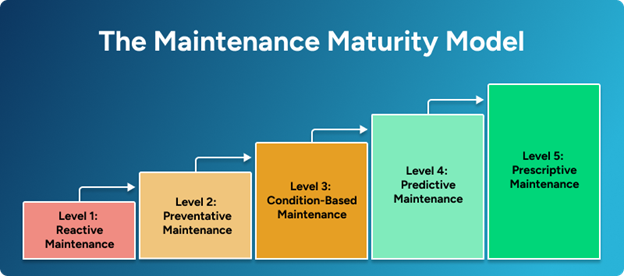
Preventative maintenance shouldn’t just be thought of as a technical approach, but a leadership philosophy. By encouraging teams to plan ahead, executives foster resilience and move their organisation up the maintenance maturity model.
3. Streamline Workflows for Efficiency
Inefficient workflows remain one of the most common barriers to productivity. Delayed work order assignments, manual paperwork or lack of mobile access keep technicians focused on administrative tasks instead of value-added work. For organisations managing large portfolios, even small inefficiencies multiply into significant costs.
Facilities leaders can unlock hidden capacity by modernising workflows. Doing so not only saves time but also improves employee morale and service quality across the organisation.
Best Practices for Facilities Leaders
- Automate work order routing. Digital rules ensure tasks are assigned to the right technician based on skills, availability or location.
- Enable mobile-first workflows. Giving technicians mobile apps means updates, photos and compliance checks happen in real-time.
- Embed compliance into the process. Digital workflows should include required safety or regulatory steps, so nothing is missed in the next audit.
When leaders streamline workflows, they demonstrate a commitment to efficiency and empower teams to focus on solving problems instead of managing paperwork.
4. Use Data to Guide Capital Planning
Capital budgets are often limited, forcing leaders to make difficult trade-offs. Which building gets renovated first? Which equipment is replaced, and which is repaired? Without reliable data, these decisions can feel arbitrary and difficult to justify to finance stakeholders.
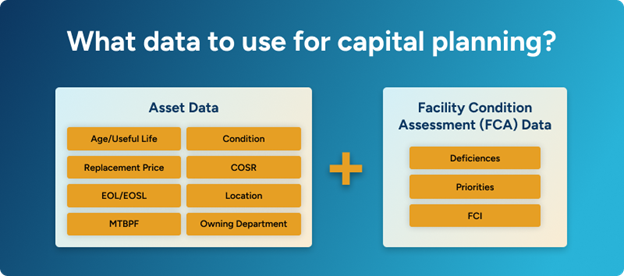
Facilities leaders who link operational data to capital planning create transparency and credibility. By connecting asset condition scores, maintenance backlogs and utilisation rates to funding decisions, they show exactly why one project is more urgent than another.
Best Practices for Facilities Leaders
- Prioritise with condition data. Capital requests backed by asset condition scores and risk assessments are far more persuasive.
- Align with organisational goals. Direct investment toward initiatives that reduce safety risk, improve compliance, advance ESG commitments or enhance user experience.
- Track planned vs. actual spend. Monitoring variances over time builds trust with finance leaders and improves future planning accuracy.
This data-driven approach positions facilities executives as strategic partners in financial decision-making, not just cost centres.
5. Address Underutilised Assets
Facilities leaders are under pressure to do more with less, yet many assets remain idle or underused. Office occupancy varies across the world, in the U.S. it often hovers below 40-50%, while equipment, utilities and service contracts continue to generate costs even when demand is low. Without action, organisations waste valuable resources and carry unnecessary expenses.
Leaders who confront under utilisation directly can reduce costs, improve sustainability due to waste, and reallocate resources toward higher-value priorities. Success depends on using accurate utilisation data, making thoughtful consolidation decisions and aligning changes with organisational needs.
Best Practices for Facilities Leaders
- Measure utilisation across assets. Use space management tools like booking systems, IoT devices like sensors and data from an IWMS/CMMS/EAM to track occupancy, equipment usage and service demand.
- Consolidate or repurpose. Shut down, reassign or repurpose underused spaces and equipment rather than maintaining them unnecessarily.
- Protect experience and culture. Ensure that consolidation preserves essential collaboration, safety and employee engagement.
By addressing under utilised assets holistically, facilities leaders deliver measurable cost savings while transforming facilities from passive cost centres into active strategic assets.
Conclusion: Lead with Strategy and Vision
Facilities management leadership today demands more than operational oversight. It requires foresight, discipline and the ability to connect data to organisational strategy. By standardising asset data, prioritising preventative maintenance, streamlining workflows, guiding capital planning with data and optimising underutilised assets, leaders can create organisations that are cost-effective, resilient and future-ready.
The leaders who adopt these practices are not only improving operations, but are shaping the workplaces, portfolios and strategies that define tomorrow’s organisations.
If you want to speak with the Nuvolo team to discuss your technology needs or schedule a demo of our Connected Workplace management solution click here.
Allison Thomas, Nuvolo Connected Workplace
Nuvolo is a global leader in modern, cloud-based Connected Workplace solutions. Our mission is to empower organisations with a unified platform that optimises building operations, enhances asset performance and fosters smarter, data-driven decisions for a more efficient and sustainable workplace. Industries we serve include retail, manufacturing, transportation, healthcare, higher education, life sciences, government and finance. Learn more
----------------------------------------------------------------------------------------------
Register for The Workplace Event 2026 HERE.


